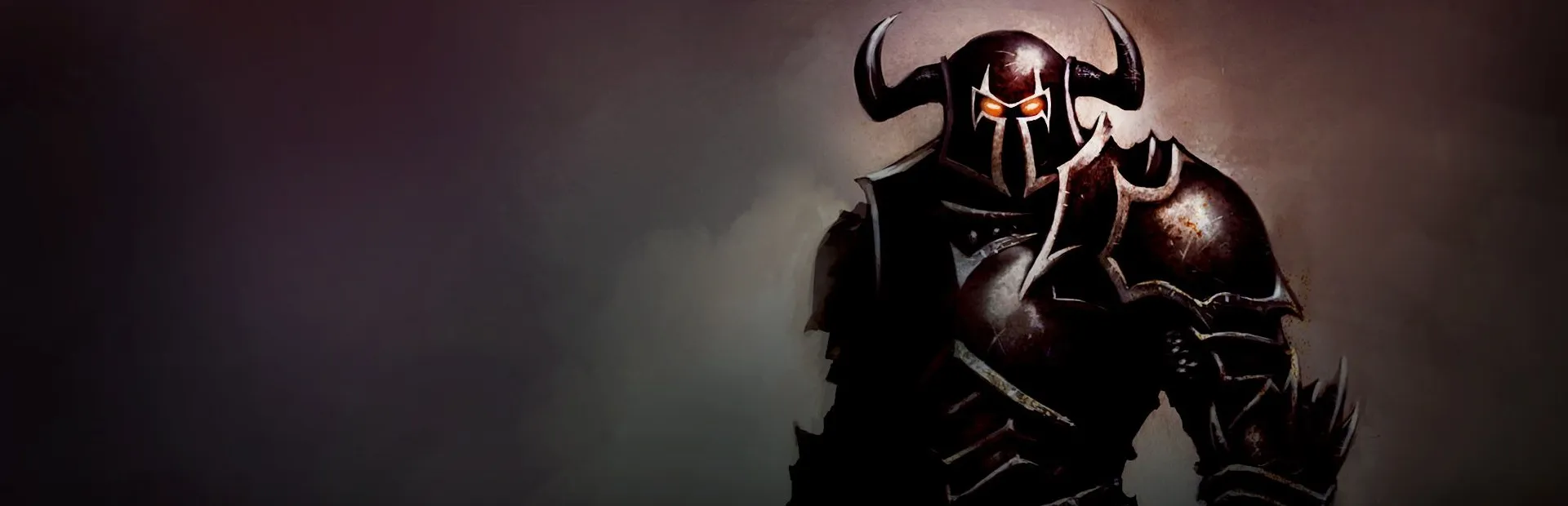
2012 · Overhaul Games
Baldur's Gate: Enhanced Edition
The Sword Coast classic, remastered
Baldur’s Gate: Enhanced Edition is a 2012 role-playing video game developed by Overhaul Games, a division of Beamdog, and published by Atari. It was released for Microsoft Windows on November 28, 2012, with additional releases between 2012 and 2014 for iPad, OS X, Android and Linux and most recently for Xbox One, PlayStation 4, and Nintendo Switch on October 15, 2019. It is a remaster of the 1998 game Baldur’s Gate and its expansion, Baldur’s Gate: Tales of the Sword Coast, retaining the original elements from both (story, in-game locations, gameplay and characters), while including additions, a separate arena adventure entitled The Black Pits, and a number of improvements some of which were imported from Baldur’s Gate II: Shadows of Amn.
An expansion was released for the remaster in March 2016, Baldur’s Gate: Siege of Dragonspear, which focuses on the events following the conclusion of Baldur’s Gate, that lead up to Baldur’s Gate II: Shadows of Amn.
Gameplay
Much like the original game, Baldur’s Gate: Enhanced Edition follows the rules of the 2nd Edition Advanced Dungeons & Dragons, licensed by Wizards of the Coast and features both single-player and multiplayer modes, while much of the gameplay, such as moving between locations, the “paper doll” equipment system, and inventory management, remains the same as the original game.
Enhanced Edition has several new features compared to the original game. Features created for the remaster include cross-platform functionality for the multiplayer mode, allowing players on different platforms to be able to play with each other, the addition of a stand-alone arena adventure, The Black Pits, in which players form a party of six adventurers and battle against increasingly difficult opponents, the addition of four characters, each having their own dialogue and some having their own associated adventures, with bonus quest enemies that have been added to the game described as posing a “more vigorous challenge”, five class kits - the Dwarven Defender, Shadowdancer, Dragon Disciple, Dark Moon Monk and Sun Soul Monk, a few locations added to the game, an achievement system (for Steam versions only), and two difficulty modes - Story Mode, and Legacy of Bhaal. Story Mode is an enhanced version of Easy difficulty, in which all characters in the party cannot die, have a strength stat of 25 (regardless of the actual value) and are immune to most negative effects, while all enemies can be damaged and killed easily. Legacy of Bhaal, in contrast, is an enhanced version of Insane difficulty, with enemies having more hit points, saving throws, THAC0 and attacks per round, while the difficulty cannot be changed once implemented by the player.
Some of the major improvements to the original game that are incorporated into the remaster, include a revamped user interface, the ability to play at higher resolutions as well as different viewing modes including widescreen, increased flexibility to mod the game, a new renderer, multiplayer matchmaking abilities (at the time of launch, this function was in a beta state), updates to the map and journal system, the level cap for the remaster being raised, and the importation of improvements and some elements from both Baldur’s Gate II: Shadows of Amn and its expansion pack, including classes, subraces and class kits, that were not available in the original game; a later patch the romance element from Baldur’s Gate II is also incorporated, but only the new characters have this implemented. The developers included an auto-update function, with further modifications made to the remaster based on suggestions made by users.
The iPad and Android versions are described as a radical departure from the game’s original interface, allowing for zooming in and out via multi-touch gestures, which allows for larger text. The tablet versions allow for users to swipe between screens instead of clicking on tabs. Ex-Bioware employee and creative director for the enhanced edition Trent Oster said: “When I describe playing a Baldur’s Gate combat scenario to someone, I use the analogy of a football playbook. … When you think about Baldur’s Gate in this light, the iPad makes so much sense. In fact, I think Baldur’s Gate is almost the perfect game for the touch interface—it was just released a decade early”.
Synopsis
Much of the game retains the original setting of Baldur’s Gate and its expansion - that of the Forgotten Realms continent of Faerûn, the city of Baldur’s Gate and the locations south of it within the regions of the Sword Coast and the Western Heartlands, including Beregost, Nashkel, Durlag’s Tower and Candlekeep. The main story, too, is still retained - the player creates a character and takes them across the game’s setting to investigate the iron crisis that is plunging Baldur’s Gate towards a war with the neighbouring nation of Amn, uncovering it as the work of the game’s main villain, Sarevok. All of the original characters that can join the player’s party, and the quests that can be undertaken from both the main game and the expansion, still present within the remaster. The Enhanced Edition adds four non-player characters (NPCs) that can join the party, with three incorporating standalone story-lines (an element used with NPCs in Baldur’s Gate II) of which two feature new locations.
The standalone arena adventure created for the remaster, The Black Pits, features a story set before the main events of Baldur’s Gate, in which players create their own party of adventurers, in a similar fashion to that of the Icewind Dale series, and undertake battles in an area situated in a small portion of the Underdark, though there is little to do in terms of exploration except for the holding cells the party can move around within.
The Black Pits
Prior to the events of Baldur’s Gate, a colony of Duergar dwarves is defeated by a mad drow sorcerer named Baeloth, who imprisons them and forces them to create an entertainment complex of his own design within the Underdark. Through his complex, the Black Pits, Baeloth assumes the title of “Baeloth the Entertainer”, and draws in living creatures, monsters and adventurers from throughout the realms, either by invitation or forcefully capturing them, and pitting them against each other for loot. All who are brought to the Pits are imprisoned under the effects of a geas and cannot escape, eventually being killed during one of Baeloth’s matches, with the exception of a champion, who was pitted against Baeloth himself after winning all their matches, but dying against the sorcerer. Baeloth’s latest victims, a party of six adventurers (whose origins and past remain a mystery), survive their qualifying match and find themselves coerced into fighting in the Black Pits, learning that the drow is aided by a djinn named Najim, while their holding cells include several prisoners forced to operate as merchants, and a beholder who offers advice on the matches the party encounter.
Over time, with each successful match, Baeloth becomes increasingly frustrated at their survival against the tougher monsters he brings in, while some of merchants express support for their victories, along with hope that they may become free. Eventually, after becoming champions of the Pits, Baeloth decides to take the group on himself, expecting to defeat them and eliminate them so as to provide the crowds with some new fighters to root for. However, the match ends with Baeloth defeated himself and his geas on all of the complex’s prisoners lifted. Najim, grateful of his freedom, helps the party escape, knowing that the duergar clan they freed will see them as outsiders and not accept them. The party swiftly leave by a portal, and enjoy their freedom soon afterwards.
Screenshots
Click any shot to enlarge. Platform tag shows where each image is from.